
Nafilux / Process
From field to yarn.
Hackled, drawn and wet-spun: the process behind the finest linen yarns.
Overview
Ten stages, two places.
The first four stages take place in the fields and scutching mills of France, Belgium and the Netherlands. The next six, at the Rebordões mill.
- 1Growing
- 2Pulling
- 3Retting
- 4Scutching
- 5Hackling
- 6Drawing and roving
- 7Boiling and bleaching
- 8Wet spinning
- 9Drying
- 10Winding
Weavers and knitters
3–5 days’ transportFrom field to fibre, in Europe.
Carried out by Masters of FLAX FIBRE™ certified growers and scutchers.
-
Growing
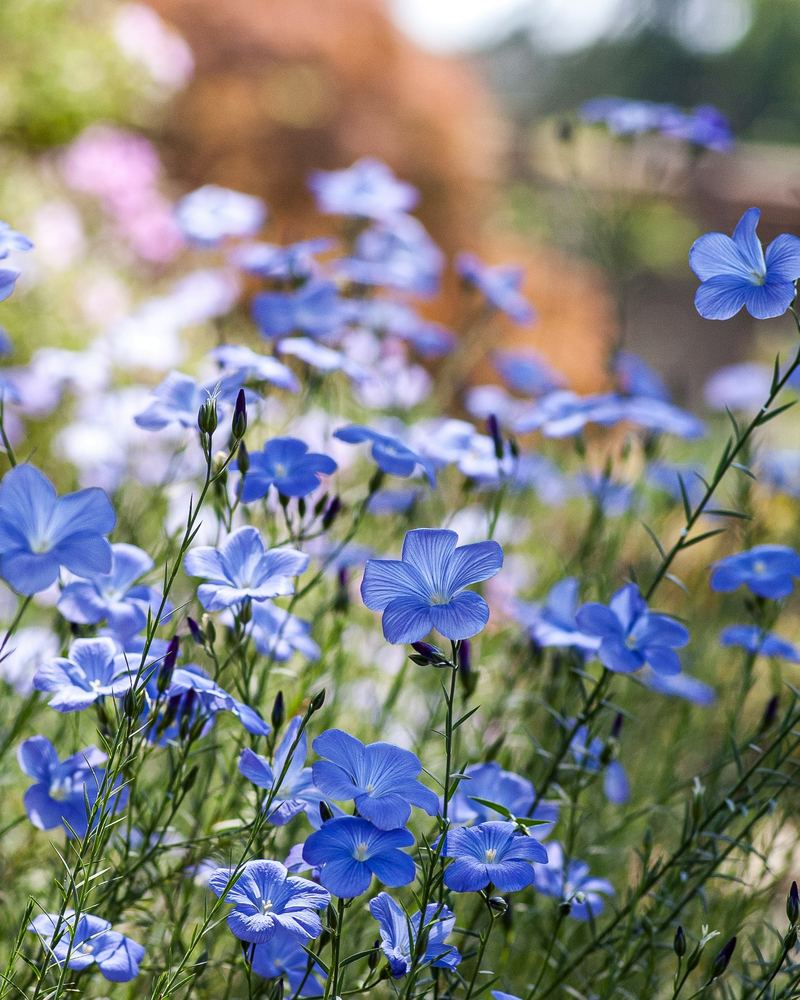
Flax is sown in spring in the coastal regions of France, Belgium and the Netherlands, where the mild, humid climate favours long, fine fibre.
Photo: Yoksel Zok / Unsplash
-
Pulling
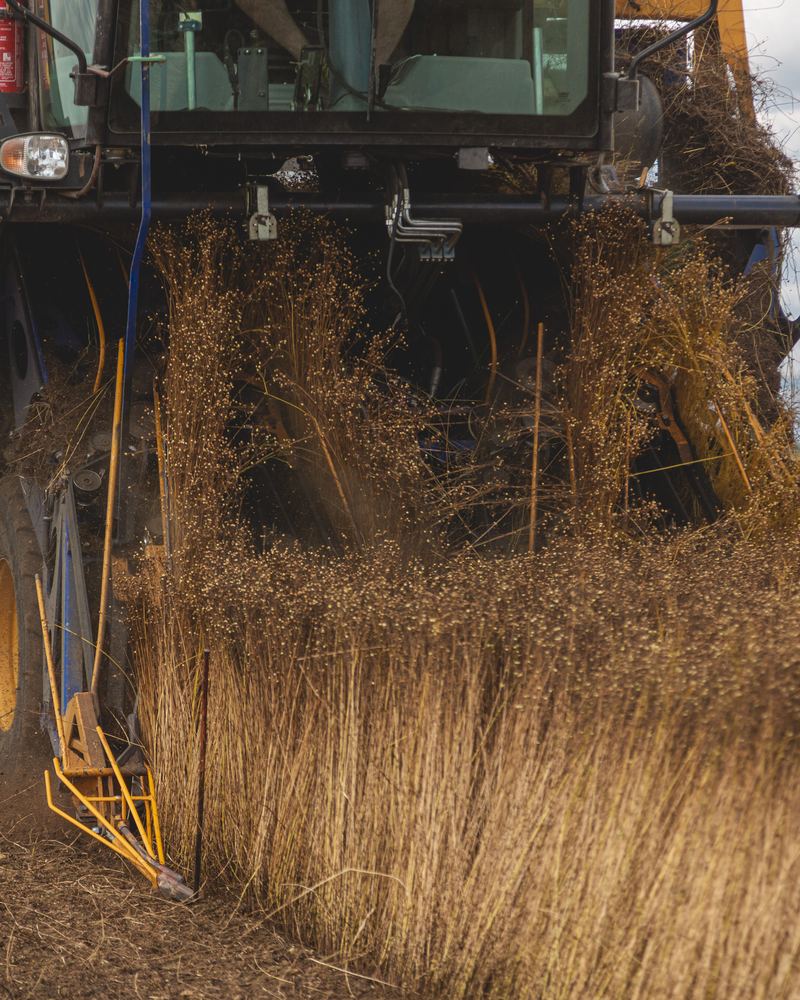
The plant is pulled, not cut, to keep the full length of the fibre, and laid in swaths on the field.
Photo: © P. Sagnes / Alliance for European Flax-Linen & Hemp
-
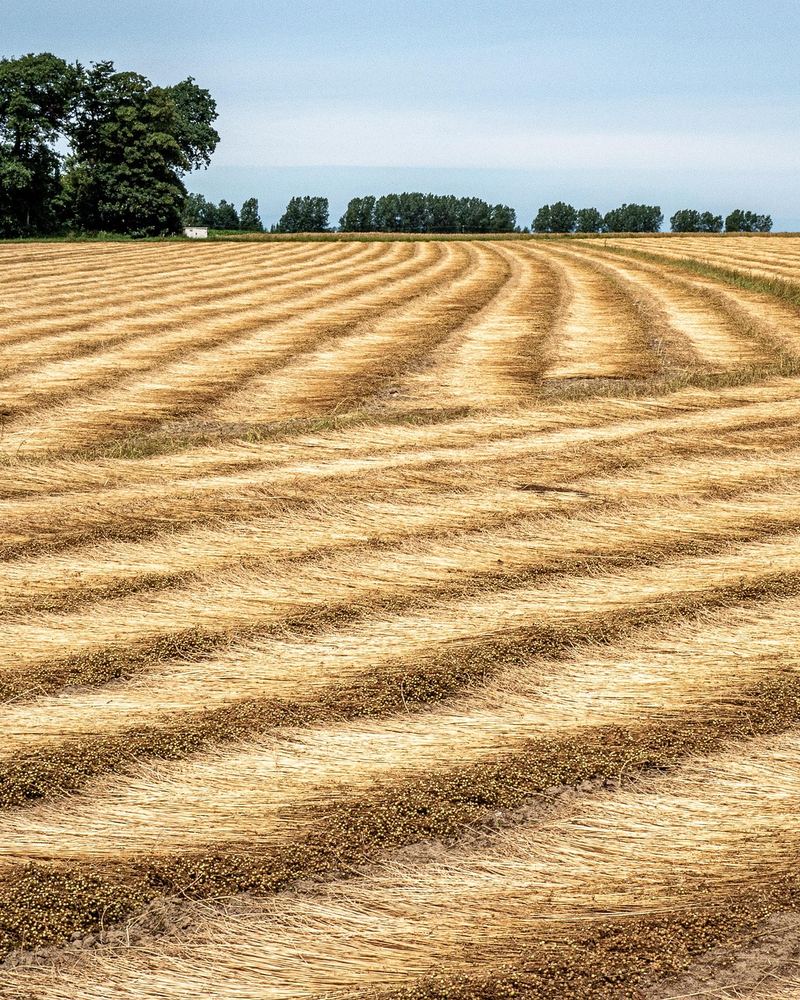
Field retting
Sun, rain and soil micro-organisms loosen the fibre from the woody part of the stem. Water retting is not allowed by the standard.
Photo: barskefranck / Pixabay
-
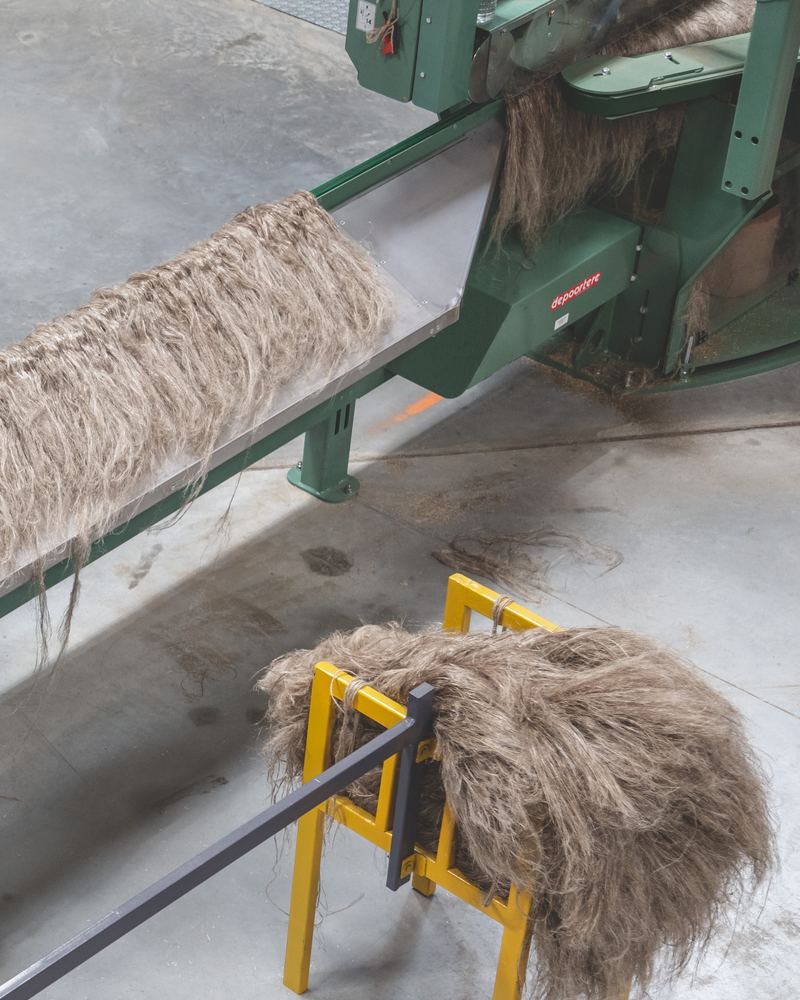
Scutching
The fibre is extracted mechanically, without water or solvents. Long fibre is separated; the other parts of the plant go to other uses.
Photo: © P. Sagnes / Alliance for European Flax-Linen & Hemp
From fibre to yarn, in Rebordões.
Hackled, drawn and wet-spun: the process behind the finest linen yarns.
-
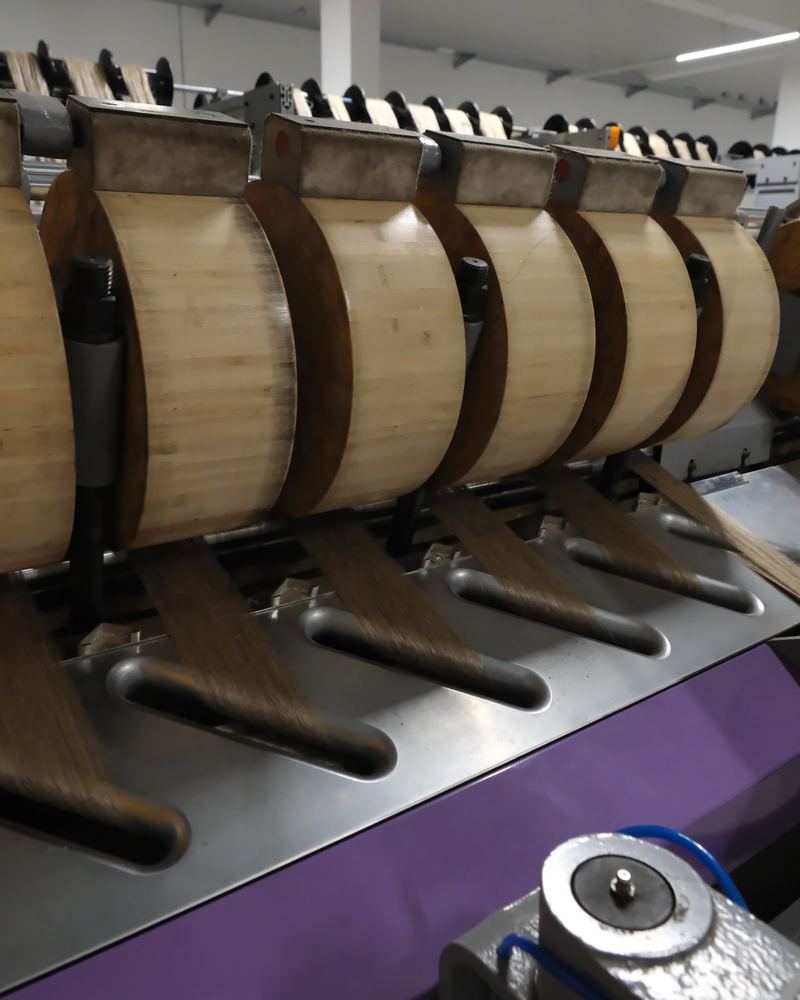
Hackling
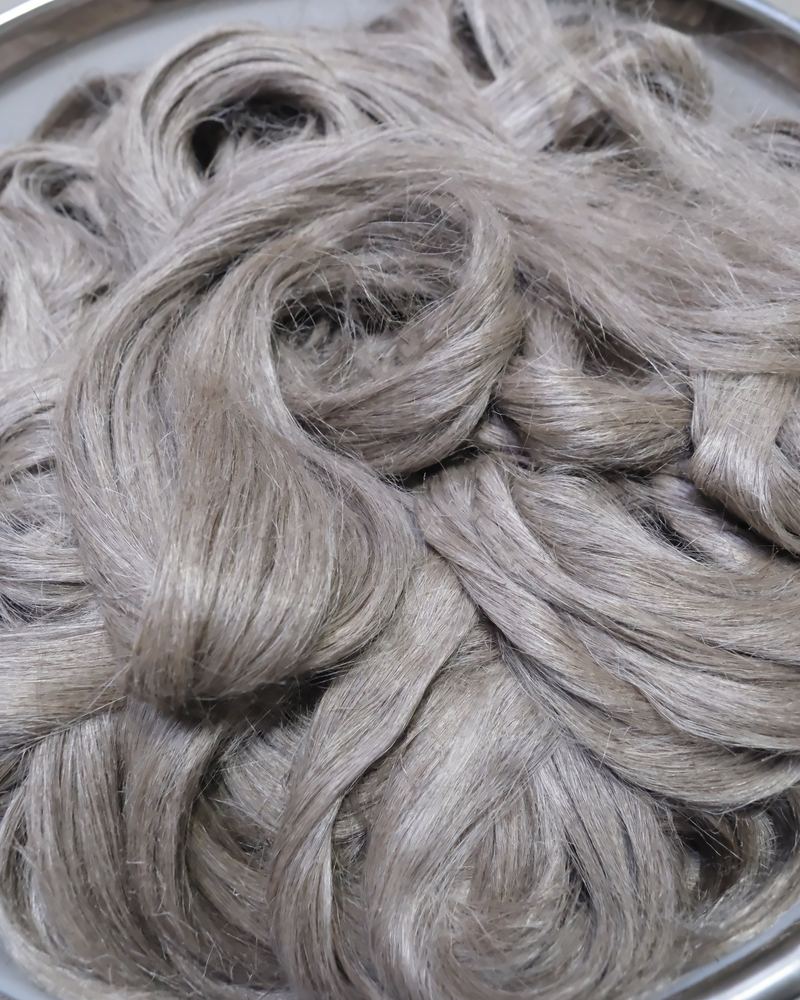
Hackles separate and align the long fibres, pass after pass. Short fibres (tow) are removed at this stage.
-
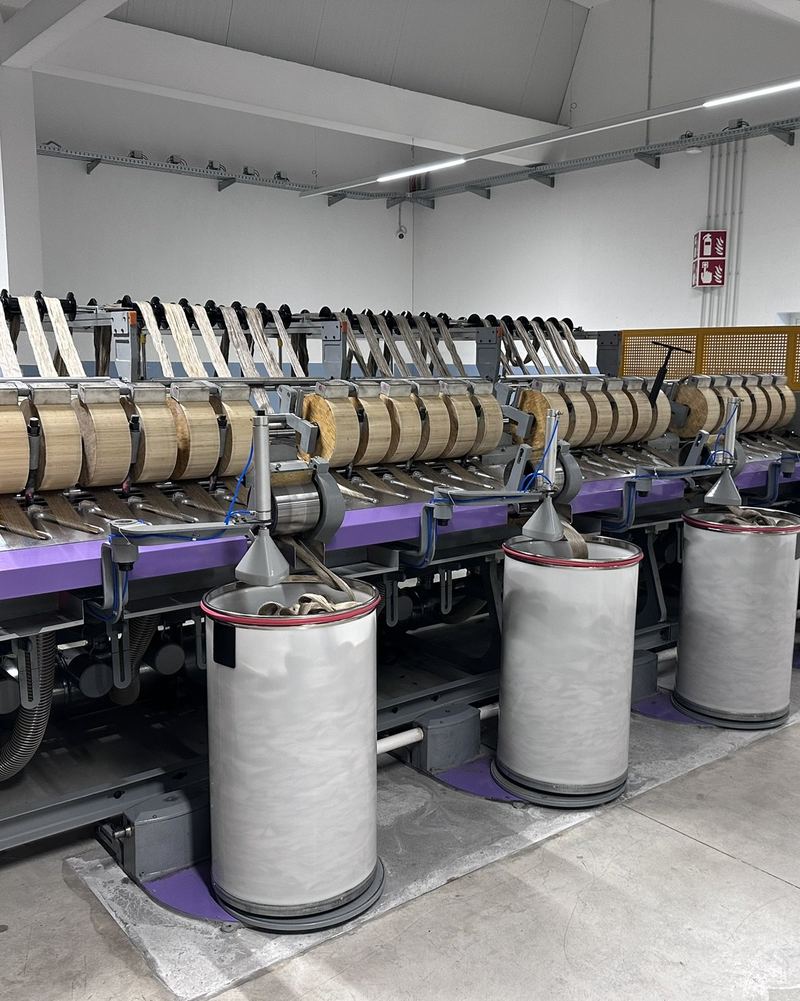
Drawing and roving
Slivers are doubled and drawn several times until they form an even roving with a slight twist.
-
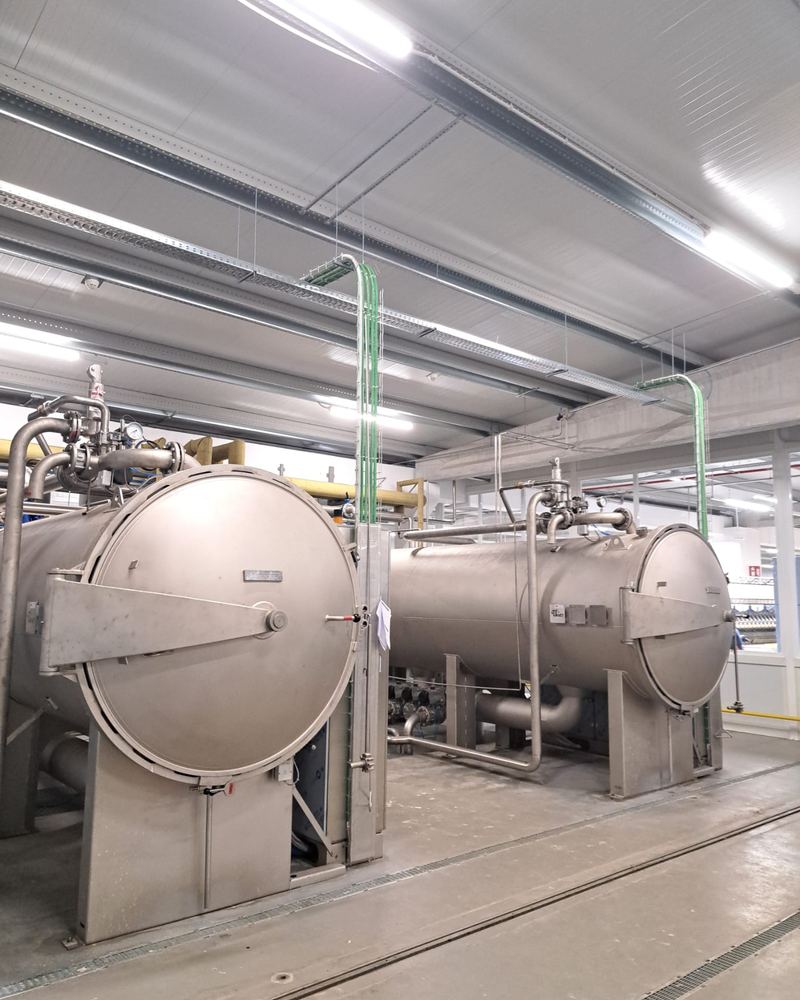
Boiling and bleaching
The roving is boiled and bleached in autoclaves before spinning, which sets the shade and prepares the fibre for drafting.
-
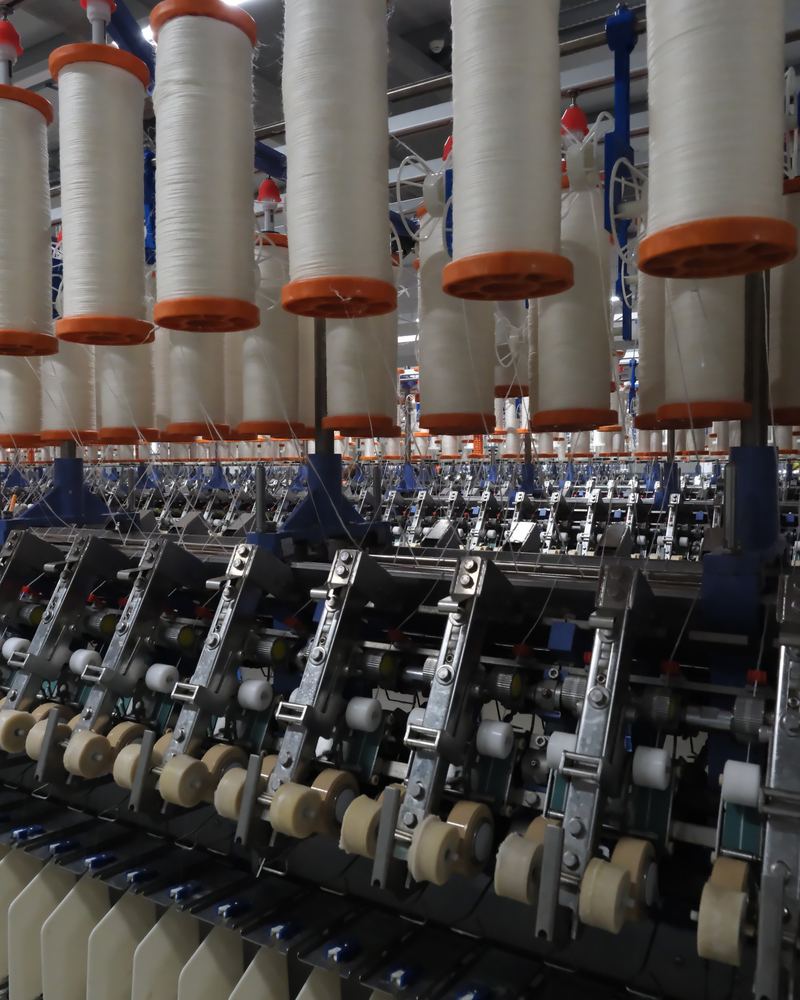
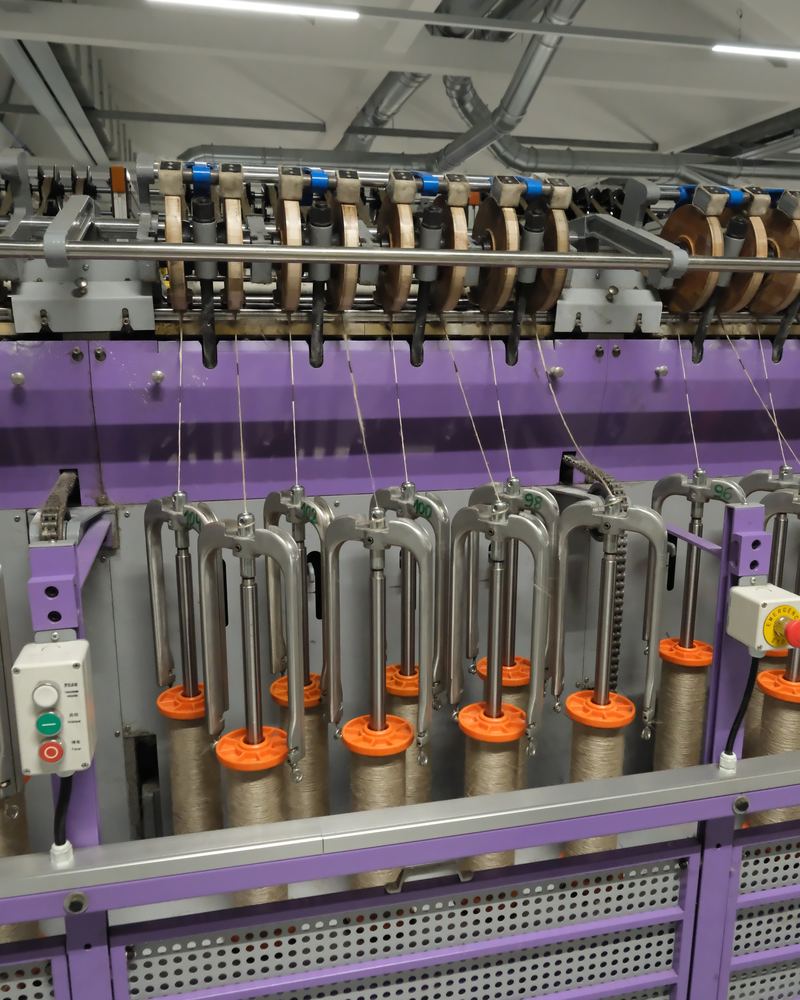
Wet spinning
The roving passes through hot water, which softens the pectins binding the fibres. They can then be drafted further, and the yarn comes out fine, even and strong.
-
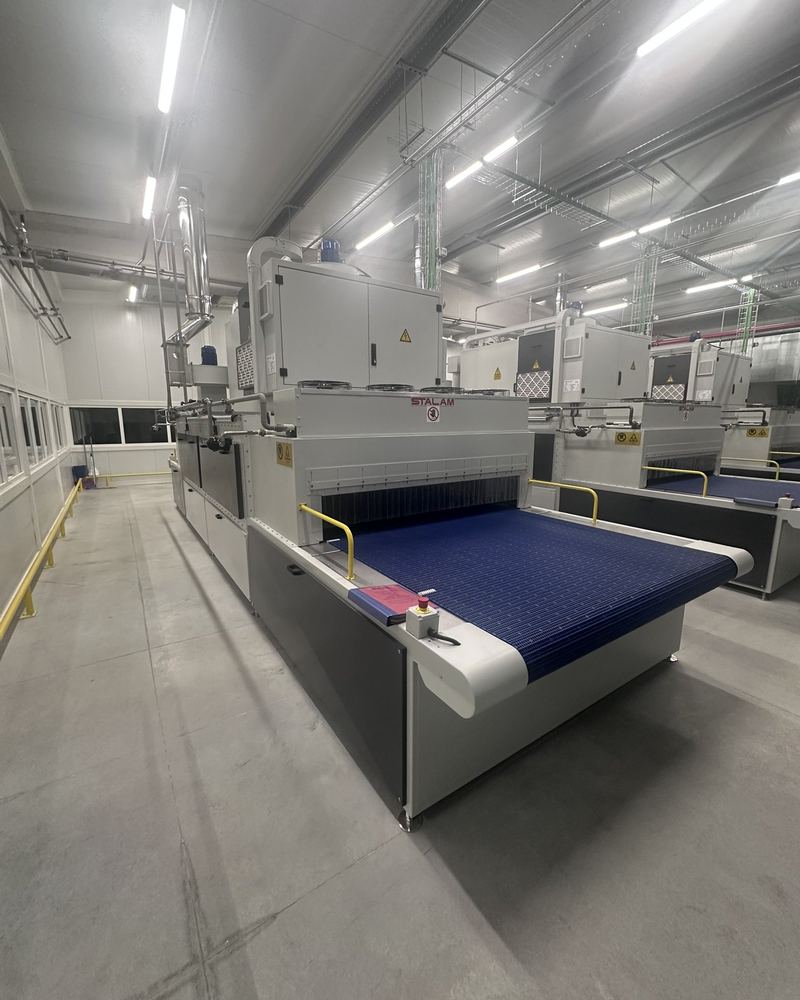
Drying
The wet yarn is dried by radio frequency, in a controlled and even way.
-
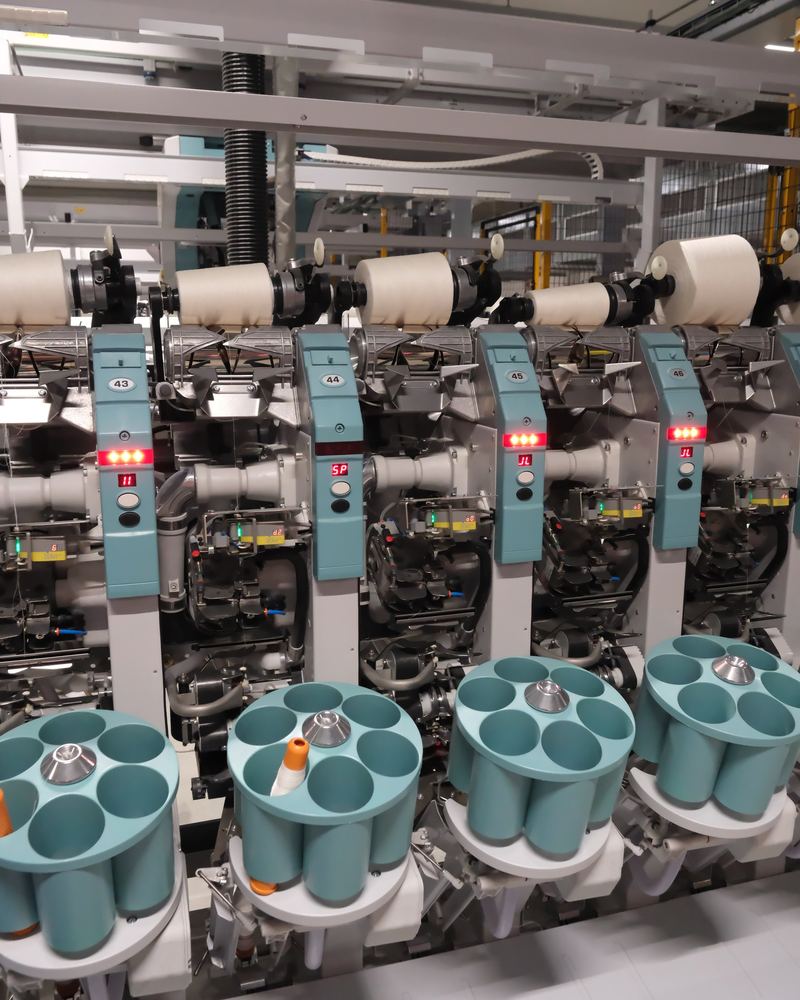
Winding
The yarn is wound onto cones, checked and packed on pallets, ready to ship.
Why wet spinning
The process behind the finest linen yarns.
There are two ways to spin flax. Wet spinning is the one that reaches finer counts and more even yarns. Few mills in Europe master it.
Twelve thousand spindles in a 15 000 m² plant provide industrial scale. Quality control at every stage makes sure each bobbin matches what the customer ordered.
| Wet spinning · Nafilux | Dry spinning | |
|---|---|---|
| Drafting | Roving passes through hot water before drafting | Roving drafted dry |
| Counts | Fine and medium: Nm 20/1 to Nm 50/1 | Coarser |
| Yarn | Smoother, finer and more even | Bulkier and hairier |
| Typical uses | Shirting, apparel, light knits, home textiles | Heavy home textiles, upholstery, technical uses |
Request a sample or a quotation.
Company, count, quantity and lead time. We reply by e-mail.